
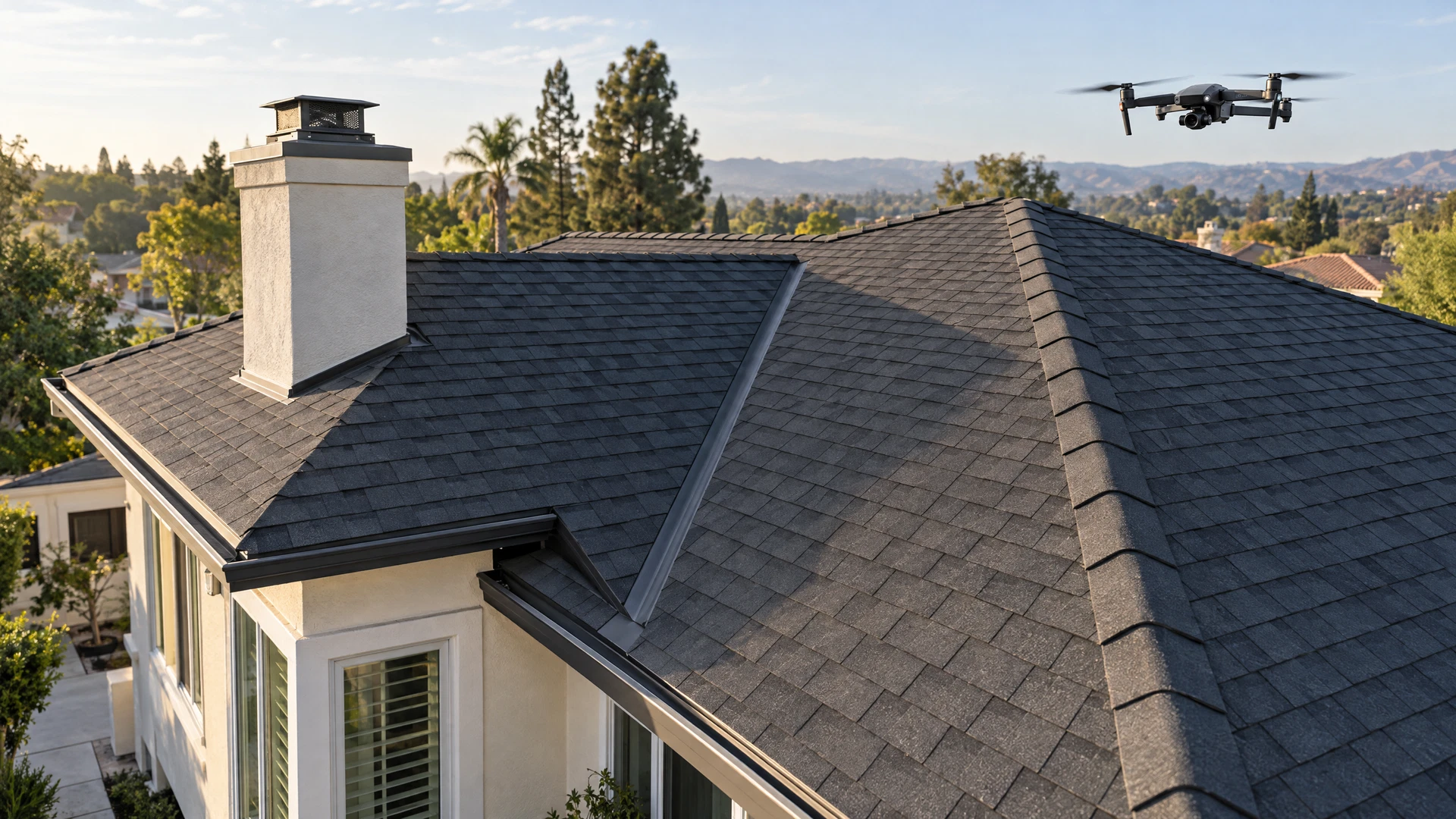
What an aerial view can add
From above, the inspector may be able to view portions of a roof that are too steep to walk or otherwise difficult to approach. The images can help document visible roof surfaces, peaks, valleys and selected exterior details, as well as provide a broader view of how parts of the property relate to one another. Depending on what is visible, an aerial image may help record apparent wear, displacement, debris or other conditions that merit attention.
A drone view has a defined scope: it records what the camera can see from its position, at that moment. It cannot confirm the condition of concealed materials, measure every detail, or replace hands-on assessment where that is safe and appropriate. It also does not establish the cause or remaining life of a roof component. If an image suggests a concern, the report can describe the observation and indicate when closer evaluation by an appropriate specialist may be useful.
How drone use fits the inspection
Drone use is considered when access by conventional means is not safe or reasonable and an aerial perspective may contribute useful information. Whether it can be used depends on conditions at the property, including weather, wind, nearby obstacles and the practical ability to operate the aircraft safely. A suitable view may not be possible at every home or commercial site, and some areas may remain inaccessible or outside the available camera view.
For a commercial building or a property with unusual roof geometry, the appropriate scope can vary with the site and the client's needs. If you are arranging an inspection with an area of particular concern, describe it when discussing the scope so its accessibility can be considered. Baker Inspection Group can clarify whether aerial documentation appears appropriate for that property; availability and visibility should not be assumed before site conditions are known.
Useful documentation, clearly explained
Aerial photographs are most helpful when they are interpreted in context. The inspection report is prepared using Scribeware and focuses on property-specific observations, with photographs and descriptions intended to make findings understandable. The goal is to help a buyer, owner or other client see what was observed and distinguish a visible condition from an item that could not be evaluated from the available vantage point.
Scot Baker's construction background informs how visible details are considered, while his InterNACHI certification and Certified Master Inspector designation reflect his inspection credentials. For commercial assignments, he is also a member of CCPIA. These qualifications do not make a drone image conclusive on its own; they support a measured inspection process in which limitations are stated rather than hidden. Clients who have questions about a report finding can contact the company for clarification.
Good questions.
Clear answers.
Can a drone inspect every roof or exterior area?
No. Aerial views depend on the property's layout and the conditions on the day of inspection. Wind, weather, obstacles or other practical limitations can prevent a flight or restrict what the camera can see. If a portion cannot be viewed, it should not be represented as inspected; the report can note relevant access limitations.
Does a drone replace walking or closely examining a roof?
No. Drone imaging is one possible method for documenting visible areas that are unsafe or unreasonable to reach. It does not provide hands-on information, show concealed components, or guarantee that every defect will be identified. The inspection approach depends on what can be safely and reasonably accessed at the property.
Can I request a drone view of a specific concern?
Yes, tell Baker Inspection Group about the area when discussing the inspection scope. The company can consider whether an aerial view may be useful and feasible, but use depends on property and flight conditions. No particular view or finding can be promised in advance.
Your next step
If an elevated roof or exterior area is part of your concern, mention it when arranging an inspection. Baker Inspection Group can discuss whether drone documentation may fit the property's conditions and explain any limits in the resulting report.
Arrange your inspection