
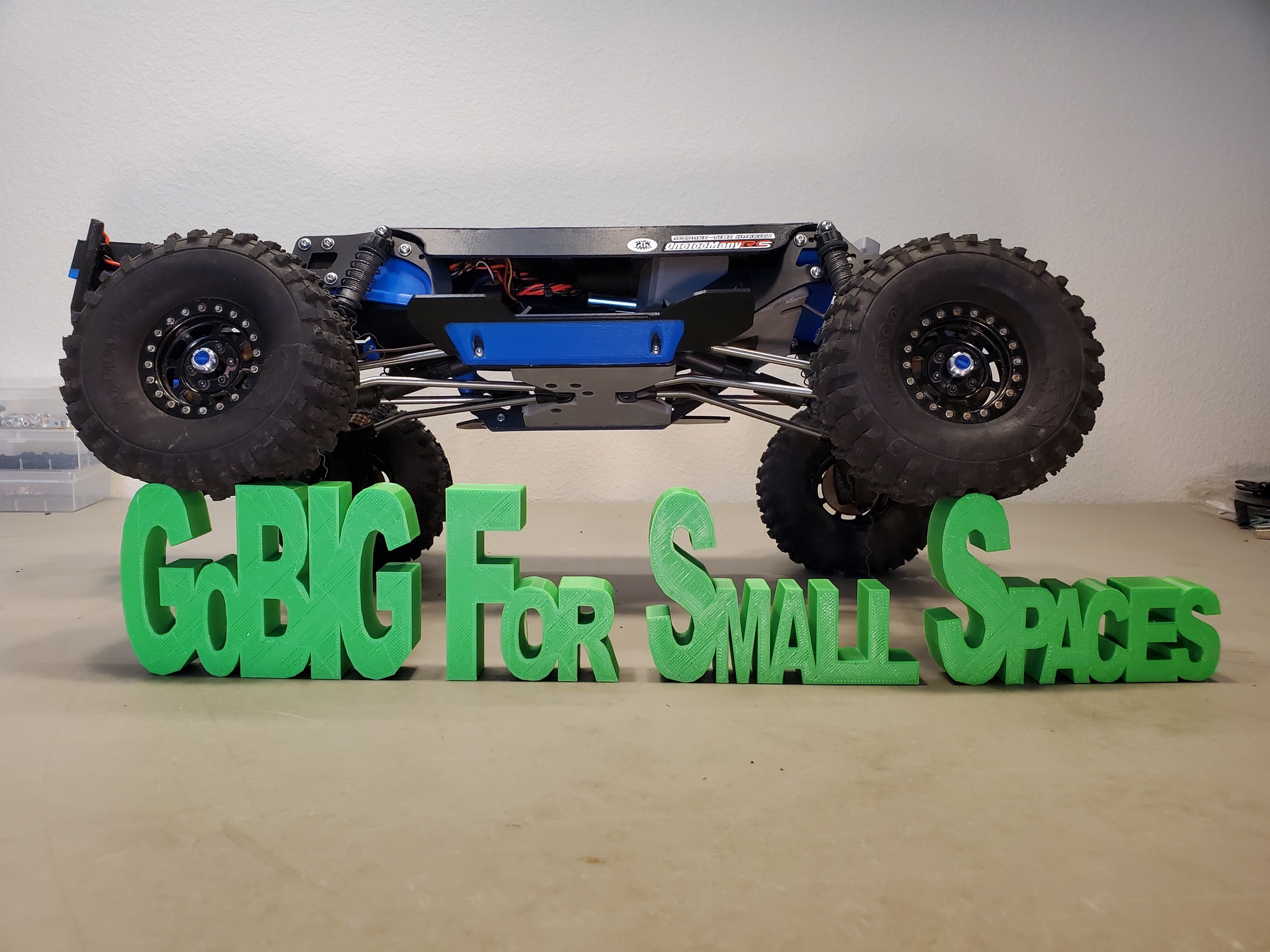
How the BIGCrawler supports an inspection
The BIGCrawler is a tool for visual observation, not a substitute for every kind of access or testing. When conditions allow, Scot can guide the vehicle through an accessible opening and use its camera to view areas that may otherwise be difficult to see. The camera’s pan-and-tilt movement helps direct the view toward nearby surfaces and features without requiring the inspector to be beside the camera.
That perspective can help document visible conditions in an underfloor area and inform the inspection’s overall account of the property. It does not mean every part of a crawlspace can be reached or seen. Physical obstructions, the opening’s size, the terrain, standing water, loose material, signal or visibility conditions, and other site-specific factors can affect whether and how the vehicle can be used. Any findings remain limited to conditions that are visible at the time of inspection.
A design shaped by real crawlspace challenges
The BIGCrawler’s development reflects a practical problem Scot encountered in the field: some low crawlspaces are hard to enter, and an inaccessible area can leave less visual information available. He began with an RC platform and camera, then refined the vehicle through successive models—including the BIGCrawler2, BIGCrawler360 and BIGCrawler360HV—before the BarNone edition. The result is equipment created around maneuvering in confined, irregular underfloor spaces rather than a general-purpose camera on a wheeled base.
On BarNone, four-wheel steering is intended to make turning in tight quarters more manageable, while the high-clearance chassis is designed to negotiate uneven surfaces and common crawlspace obstacles. A 4K camera mounted on a pan-and-tilt assembly provides a view that can be redirected as the vehicle moves. These features improve the tool’s potential usefulness, but they do not guarantee passage through every opening or across every surface. The inspection approach is determined by the actual space and its conditions.
Useful observations, clearly reported
Remote viewing is most helpful when the observations are connected to the property, rather than presented as technology for its own sake. Baker Inspection Group emphasizes clear, property-specific reporting. Inspection reports use Scribeware and can include written findings and photographs; its Create a Request List feature lets clients and their agents select report items and create a repair-request/addendum PDF. The crawler’s camera may add visual context when it can reach a relevant area, while the report explains what was observed and where further evaluation may be appropriate.
Scot brings more than 40 years of construction experience and has completed thousands of property inspections. As the owner and lead inspector, he applies that hands-on background to interpreting what is visible, including the limits of a remote view. The BIGCrawler is one part of an inspection process—not a promise that hidden defects will be found, nor a replacement for specialized testing or a specialist’s assessment when one is warranted. Baker Inspection Group has served the Central Valley since 2009.
Good questions.
Clear answers.
Can the BIGCrawler inspect any crawlspace?
No. Its compact design can help in some spaces that are difficult for a person to enter, but access depends on the opening, clearance, layout, ground conditions, obstructions, and other factors at the property. If the vehicle cannot enter or move safely, some portions may remain inaccessible. The inspector can explain what was and was not viewable.
What does the camera show, and does it test the structure?
The camera provides visual views of areas the vehicle can reach, and its pan-and-tilt movement lets the operator redirect the image. It does not perform destructive investigation, measure every concealed condition, or replace specialized testing. A camera view is limited by lighting, obstructions, surface conditions, and the direction and range of the lens.
How do I find out whether the BIGCrawler may be useful at my property?
Share the property location and any details you know about the crawlspace opening or access constraints when discussing an inspection with Baker Inspection Group. The team can talk through the requested scope and whether use of the vehicle may be appropriate; suitability cannot be confirmed without considering the actual conditions. Call (209) 522-5320 or email [email protected].
Your next step
If a crawlspace is tight or difficult to access, ask whether the BIGCrawler could contribute useful visual documentation during your inspection. Discuss the property and requested scope with Baker Inspection Group at (209) 522-5320 or [email protected]; use of the vehicle depends on site conditions.
Arrange your inspection