
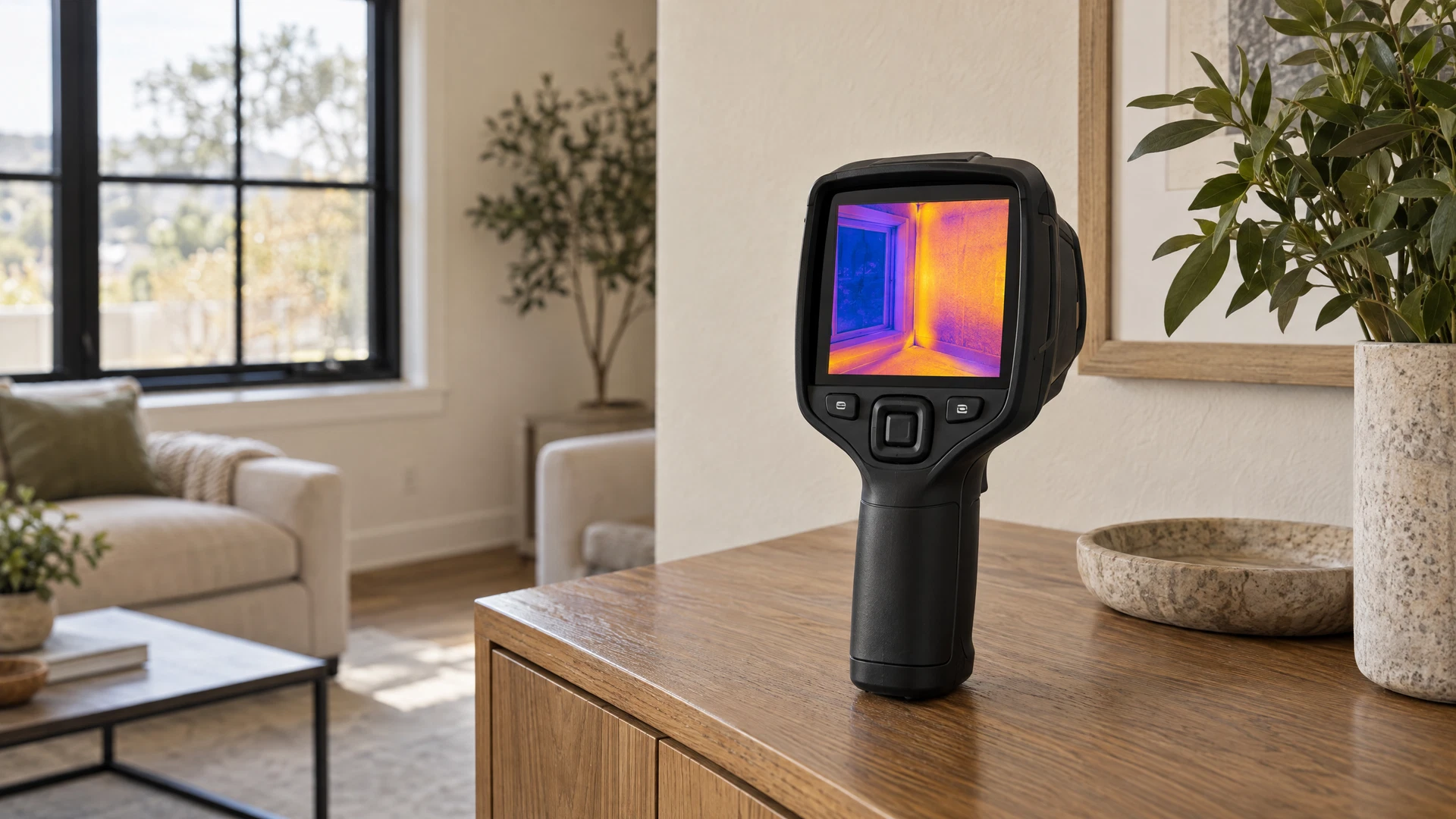
Where a temperature pattern may help
Moisture is one reason a surface may have a different temperature from nearby areas. A thermal image can help draw attention to an anomaly that could be consistent with hidden moisture or a leak, including where there is no obvious surface stain. That is a useful lead, but not confirmation: other conditions can create similar temperature differences, and a camera reading alone cannot establish the source, extent, or cause of moisture. Any concern should be considered with visible signs and the circumstances at the property.
Differences across ceilings, walls, or other accessible surfaces may also suggest uneven insulation or air movement, while patterns around heating equipment or registers may prompt a closer look at system operation. The value is in directing attention to a question worth assessing—not in promising that every insulation void, leak, or equipment fault will appear. If an area is inaccessible or conditions do not produce a useful contrast, thermal imaging may not reveal a meaningful pattern there.
A tool within a broader inspection
Thermal imaging is most useful when it adds context to the rest of an inspection. Scot Baker brings more than 40 years of construction experience and has completed thousands of property inspections; that practical background helps frame an observed pattern against the visible building components and other clues. The camera is one part of an inspection process, not a substitute for examining accessible surfaces, asking what the pattern may mean, and distinguishing observation from inference.
Baker Inspection Group has served the Central Valley since 2009. When an image raises a concern, the report can describe the observed location and explain why it may deserve attention, with supporting inspection observations where relevant. Thermal imaging does not determine the exact condition behind a finish, certify a system, or replace specialized testing by an appropriate trade professional. If further evaluation is warranted, the report should help the client understand the question to take forward rather than imply that the camera settled it.
Useful interpretation and next steps
A thermal image is affected by the conditions present when it is captured. Indoor and outdoor temperatures, recent system use, sun exposure, airflow, surface materials, and other factors can influence what the camera records. Some concerns may not create a visible temperature difference at that moment. For that reason, a normal-looking image does not rule out a defect, and an unusual one should not be treated as proof. The inspection narrative and the surrounding evidence matter more than the image alone.
If you are buying, selling, or maintaining a property, thermal observations can help you ask more focused questions: Is there corroborating visible evidence? Does this area need monitoring or evaluation by a specialist? Is additional testing appropriate? The answer depends on the individual finding and the property. Baker Inspection Group aims to make the observation understandable so you can decide what to discuss next, without overstating certainty or promising a particular repair outcome.
Good questions.
Clear answers.
Can a thermal camera see through drywall or locate a leak with certainty?
No. Thermal imaging records temperature differences at the surface; it does not see through walls or reveal the hidden construction directly. A temperature pattern may be consistent with moisture, but other factors can create similar patterns. The image is a clue that must be interpreted with accessible visual evidence, and it cannot by itself confirm a leak or pinpoint its source.
Does thermal imaging find every insulation or heating problem?
No inspection tool reveals every concealed condition. An insulation gap or heating-related concern may create a temperature pattern under suitable conditions, but the result depends on the surfaces, environment, system use, and timing. Some problems will not produce a useful contrast during an inspection. A lack of an unusual image should not be read as proof that no issue exists.
What should I do if the report notes a thermal anomaly?
Use the report’s description and related observations to understand what was seen and why it may warrant attention. Depending on the specific concern, you may wish to monitor the area or consult a qualified specialist for further evaluation or testing. Thermal imaging alone does not establish cause, severity, or a repair plan; the appropriate next step depends on the evidence and the property.
Your next step
Have a particular room, ceiling, or system in mind? When discussing an inspection, share the concern and property context so the scope can be considered realistically. Thermal imaging can add useful information where conditions allow, while its limits remain part of the interpretation.
Arrange your inspection