
Foundation stage: look before the pour
A foundation-stage visit takes place before concrete is poured, while footings and other accessible foundation preparations can still be seen. The inspection may include visible footing and foundation components along with grading and site conditions relevant to the work underway. The precise observations depend on the construction stage and what is safely accessible at the time of the visit.
This timing matters because a later visit cannot provide the same view of components once concrete has covered them. The inspection documents observed conditions; it does not certify construction plans, authorize a pour, or predict future settlement. If you are coordinating a visit, discuss the builder’s schedule and the scope in advance so the timing and areas to be viewed are clear.
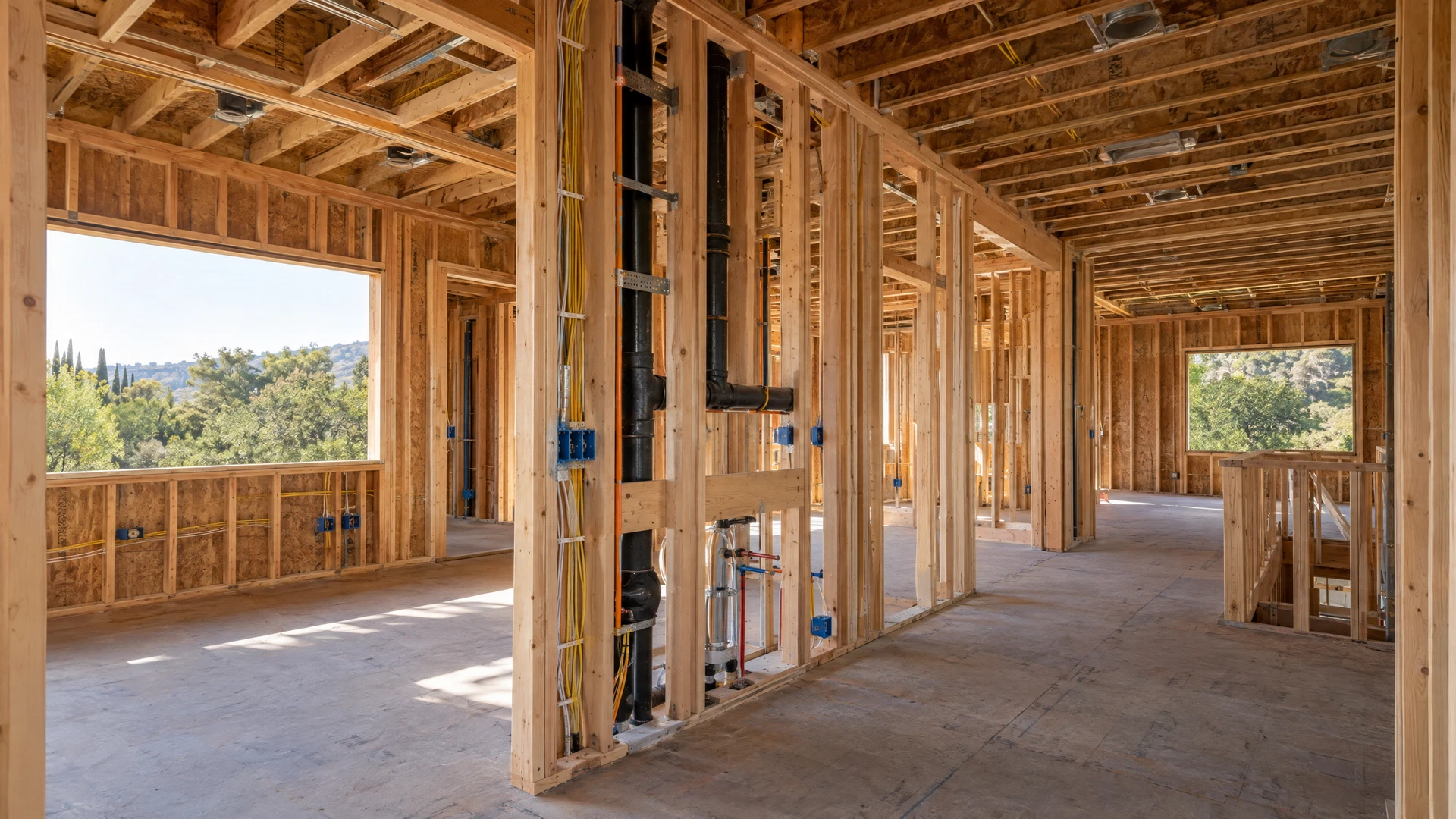
Pre-drywall: document work while it remains visible
After framing and major plumbing, electrical, and heating or cooling components have been installed—but before drywall is hung—the exposed structure offers a chance to review visible work. Attention can include framing and accessible system components, as well as insulation or other work that is present and observable at that point. This is a snapshot of accessible conditions, not a destructive inspection or a guarantee that every concealed issue will be found.
Baker Inspection Group emphasizes useful explanations rather than a page of generic boilerplate. Findings are recorded in a Scribeware report with photographs and descriptions so you can understand what was observed. Scribeware also provides a repair-request-list feature that lets clients select report items and create a request-list PDF. You and your representative can use that information to frame a conversation with the builder; decisions about corrections remain with the parties involved.
Final review and the first-year warranty window
A completed-home inspection is an opportunity to review the finished property before taking possession. Depending on access, it can cover visible components from the roof and exterior through interior areas and major systems, noting defects, unfinished items, or conditions that merit follow-up. A new home is not assumed to have a problem simply because it is inspected; the purpose is to give the buyer a clearer record of the home’s observed condition at that time.
Homeowners may also want to ask about an inspection near the end of the builder’s typical first-year warranty period. Such a visit can document concerns that have become apparent during occupancy, including conditions around the roof or attic, plumbing, electrical, HVAC, foundation, exterior, and drainage. Warranty terms differ, so review your own documents and allow time to discuss scope and scheduling. Scot Baker is a Certified Master Inspector and InterNACHI certified, and has served Central Valley clients since 2009.
Good questions.
Clear answers.
When should I arrange each construction-phase inspection?
The foundation visit needs to be coordinated before concrete is poured. The pre-drywall visit is generally scheduled after framing and major systems are installed but before the walls are closed. A final inspection is arranged when the home is substantially complete. Construction schedules can change, so discuss the milestone dates and access with the builder and Baker Inspection Group before selecting a visit.
Does a phase inspection replace the builder or local building department inspections?
No. Baker Inspection Group provides an independent inspection of observable conditions within the agreed scope. It is not a building-department approval, code-compliance certification, or replacement for the builder’s inspections and responsibilities. Use the report as information for your own decisions and discussions with the builder.
Can you inspect a home after I have moved in?
A completed-home inspection may be useful before possession, and homeowners can also ask about an inspection later in the first year, including near the end of a typical builder-warranty period. The appropriate timing and scope depend on your situation and warranty documents. Contact the company to discuss availability rather than assuming a particular date or service scope.
Your next step
If you are buying a home under construction, share the current build stage and expected milestone dates when you call or email. Baker Inspection Group can discuss which inspection scope may fit your timing and what access will be needed. Call (209) 522-5320 or email [email protected]; no inspection outcome or builder response is guaranteed.
Arrange your inspection