
LOCAL INSPECTION INSIGHTS
Central Valley Roof Inspections Before Winter Rain
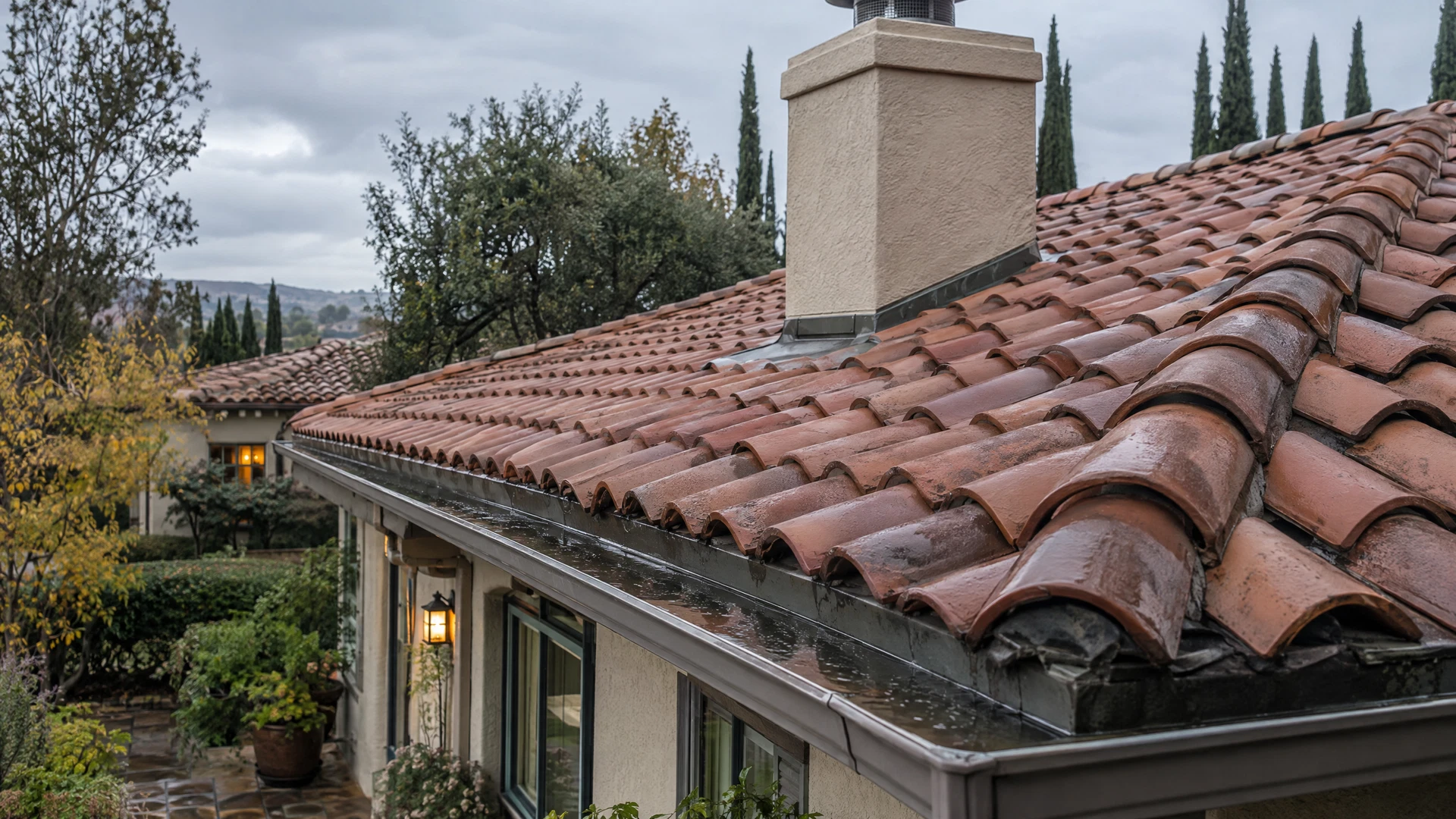
A Central Valley roof does not need a dramatic failure to deserve attention before winter rain. A loose edge at a transition, a blocked outlet, or a gap beside a penetration can change the route water takes once rainfall begins. Recording these conditions before surfaces are wet can make the conversation about next steps more specific.
For Modesto and Stockton owners, the useful question is not whether an inspection can promise a dry roof. It is whether visible conditions and accessible spaces point to maintenance or a roofing evaluation before water has the opportunity to test them.
Start With the Roof’s Water Path
Begin with the path water is meant to follow: across the visible covering, through valleys or along edges, past metal at walls and openings, into gutters, down the downspouts, and away from the building. In a pre-rain review, continuity matters more than a checklist of isolated parts. An observed displaced piece of covering, open-looking joint, or disconnected drainage component deserves context because it can interrupt that path. Following that sequence helps separate a roof-surface question from a drainage question before recommendations are made.
Give Transitions More Attention Than Broad Fields
Wide roof planes are important, but changes in direction and material often deserve the closest look. Valleys, sidewalls, chimneys, skylights, plumbing vents, and changes in roof plane are transitions where water is redirected or assemblies meet. Visible separation, deterioration, or debris at one of these locations is not a prediction of a leak. It is a reason to document the condition and, when appropriate, have a qualified roofing professional evaluate the repair approach. The visible condition should be read alongside the direction that runoff is intended to take.
Drainage Is Part of Roof Readiness
Roof runoff does not stop at the eave. Gutters and downspouts are the visible route that carries it off the roof and away from the structure. A review can note vegetation or debris, loose-looking connections, sagging sections, and outlets that appear obstructed. The goal is to see whether a clear, attached route is apparent before rain arrives. Buried extensions and concealed drainage components remain outside a visual roof review unless they are readily accessible. Routine cleaning and secure connections help those components perform their simple, important job.
Aerial Images Expand Visibility, Not Scope
Baker Inspection Group offers aerial drone roof access to help document visible areas that may be steep, fragile, elevated, or otherwise unsuitable to walk. Images can provide useful views of broad roof surfaces and higher transitions without implying that every square foot was physically accessed. They cannot reveal what lies beneath the covering, lift sealed materials, perform a water test, or certify watertightness. Glare, debris, distance, and the condition on the inspection day can also limit what imagery shows.
Look Below the Roof When Access Allows
An accessible attic can add a second viewpoint. Visible staining, sheathing discoloration, damp-looking insulation, or daylight at an opening may help focus attention, while interior ceiling conditions can add context below a roof transition. None of those observations alone establishes the source or timing of moisture. An inspector does not move insulation or enter an unsafe space simply to extend the search. Aerial views and accessible attic observations are complementary clues, not a substitute for roofing diagnosis.
Use Findings to Plan, Not Forecast
The best pre-rain result is a clear record of what was visible, where it was seen, and what follow-up makes sense. Baker Inspection Group can document observed conditions in an inspection report, with photos or video when included, so owners can prioritize routine cleaning or seek a roofing specialist’s opinion. A visual, noninvasive inspection is a snapshot of accessible conditions, not a roof-life forecast, code determination, or guarantee against future leaks. Scheduling while exterior and attic areas are accessible leaves time to act on meaningful findings.
Explore Baker’s drone inspections or schedule your inspection. Questions? Call (209) 522-5320.
Further reading: InterNACHI Home Inspection Standards of Practice · FEMA Hurricane and Flood Mitigation Handbook for Public Facilities, Fact Sheet 3.3.1: Roof Systems—Sloped Roofs